
NIGERIAN CONSUMER MARKET: Understanding Consumer Behaviour.
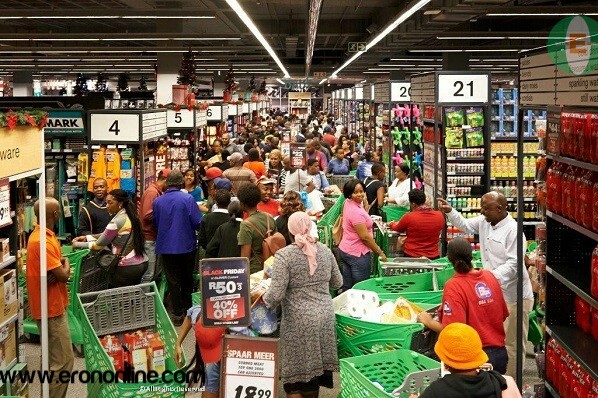
NIGERIAN CONSUMER MARKET:
Understanding Consumer Behaviour.
 Website: www.erononline.com, App download links,
https://play.google.com/store/apps/details?id=com.scriptsbundle.erontech,
https://apps.apple.com/ng/app/eron-online/id1465785150
Email: info@erononline.com
Nigeria is a huge market for manufacturing companies and a top target for the consumer product sector. With the population increasing every day, it is becoming more and more so in recent times. Nigeria’s population was recently estimated at 196 million individuals, with its growing middle class currently calculated at about fifty million. Those estimates alone put Nigeria as an awfully clear leader in both African and World consumer market. This can be seen in the wide selection of quick-selling U.S. and Chinese product within the Nigerian market from both large and small businesses alike and this has led to the massive Western and Asian interests in the Nigerian Market. Most Asian manufacturers use Africa and especially Nigeria as the market target for their products. The famous trade war between the US and China has an extension to the African market, one among other reasons the Nigerian consumer base.
The fact that an average Nigerian has internet connection supported by high mobile penetration places Nigeria collectively of the foremost prosperous consumer markets in the continent. As a result, analysis of the consumer trends within the market is a current and on-going area of interest and increasing concern for brands, monetary establishments, and media agencies.
This market has supported and sustained many foreign-owned production plants, retail outlets and fast-food franchises in Nigeria. However, a proper understanding of the Nigerian Consumer Market is required in order to leverage it.
The Nigerian Consumer Market
Nigeria, with the current population of 195,874,740 according to World Bank data (https://data.worldbank.org/indicator/SP.POP.TOTL?locations=NG&name_desc=true) is the largest population in Africa, nearly three times the size of that of South Africa. Lagos alone with over 20 million individuals is Africa’s largest city by population and also the fifth largest economy in Africa if it were a country.
Nigeria’s population has a median age of twenty years old. The middle class in Nigeria makes up 23%of the population and has an estimated potential market price of over $28 billion USD, which will only grow because the middle class will expand over the approaching years. This is as a result of 65 million individuals in Nigeria being 14 years old or younger and that is an indicator of an even larger consumer market to come within the next decade.
Nigeria’s GDP was $375.77bn in 2017 and $397.30bn in 2018 even with the prevalence of informal trade in Nigeria. According to research conducted by Business Chief, “87 per cent of the trading in Nigeria happens in informal markets.” This is particularly important because informal trade isn’t ever tracked or enclosed in overall Gross Domestic Product calculations, which implies that Nigeria’s economy is even more prosperous than the GDP calculations alone can represent.
Today, businesses ought to be attentive to the Nigerian market thanks to the cash-flow throughout the country and also the projected growth trajectory of the market. The largest population in Africa is in Nigeria and the majority of these people are young people, young savvy professionals who are growing with the economy. So as the economy continues to flourish and the population gets older, their buying power will continue to increase, their buying power will continue to increase. Therefore, companies that are looking to expand could gain advantage from learning more regarding this powerful set of customers.

UNDERSTANDING THE NIGERIAN CONSUMER BEHAVIOUR.
Understanding the average consumer in Nigeria is often a tough task for a business because it’s hard to pinpoint who an “average Nigerian” really is. It’s not an easy challenge to search out commonalities and trends among the customers in a culturally diverse pool of citizens in a country of nearly 200 million citizens.
However, in spite of the numerous cultural and socio-economic variations among the country, there certain things that are relevant to every business when it involves understanding how Nigerians make their buying selections. This understanding can help you build a good strategy for your business, as you plan to target your ideal consumer in the Nigerian market.
Below are a number of factors that affect the purchasing decisions of the average Nigerian Consumer:
1. Nigerians are significantly sensitive to price and love deals, especially once it involves food and apparels. Intuitively, price is very important to the majority of African customers, however, it’s significantly crucial for Nigerians. They’re willing to spend more time and energy looking for discount product to ensure that they purchase the things they need at the lowest rate possible while still comparatively maintaining quality.
2. Beyond prices, brand loyalty is additionally high among Nigerians. The average Nigerian consumer is very loyal to their preferred brands. Lower-income consumers usually maintain brand loyalty because they generally do not like to try new things, whereas higher-income consumers equate well-known brands with delivering a higher quality product. Within the retail market though, most Nigerians would equate consumer goods created by international brands to be more trendy and of higher quality than the local brands. However, they will still be loyal to the local brands they are comfortable with.
3. An average Nigerian consumer is optimistic regarding his/her future, particularly regarding their finances. They strongly believe that they’re going to be better off just 2 years from now. This optimism and associated resilience affects their buying decision and unusually speaks to Nigeria’s growing economic strength in the past decade.
4. An average consumer in Nigeria is media and digital savvy. Nearly half of the Nigerian population (46.5%) has access to the internet and uses it often to have interaction with brands on numerous social networking platforms. This is a great factor affecting purchasing power for several reasons because the global market and its trends have a trickle-down effect. This provides online retail and e-commerce business a crucial market opportunity.
5. Urban consumers in Nigeria are increasingly status-conscious and place a high premium on appearance as an individual’s success is measured as compared to their social standing among their individual community. Therefore, the average consumer in Nigeria will make their purchasing decision to reflect their current or supposed standing in Nigerian society. This trend has benefited apparel and accessories in Nigeria, as accessories are seen as necessary fashion statements by such customers.
6. In relation to status, Nigerians love more formal retail shopping experience. This accounts to a large extent why large retailers, like Shoprite and Spar, have seen positive results from opening stores in Nigeria. An average Nigerian consumer still needs to examine and feel his product before purchase. Thus an understanding of this may prove helpful in designing a good strategy for attracting and retaining clientele.
7. The average Nigerian buyer will love to buy on recommendation. Nigerian buyer are good lovers of trends and vague. It is very easy for a consumer in Nigeria to go for product brands they see on their friends, colleagues or family members. Word of mouth recommendation is one of the common way Nigerians buy. It is often said that once one person in a family or friend cycle is satisfied with a product the possibility of others around him trying out the product is above 70%.
FACTORS THAT DECIDE CONSUMER DEMAND MARKETS
Technology and Market Organization

Good support for sectors that support citizens’ abilities to act as modern consumers will play a huge role in consumer demands. In particular, adequate financial development is necessary so that the workforce can efficiently save, spend, and borrow from financial markets. Relatedly, the spread of information and communications technologies (ICTs) provides new and innovative avenues for consumer spending such as e-commerce and marketing campaigns. There is also an increasingly recognized, complementary relationship between these two sectors, as the internet and mobile phones have increased the range of financial services available to previously under-reached consumers in Nigeria. The rapid diffusion of ICTs in Africa generally, over the past decade has facilitated access to consumers in new and varied ways. Africa is currently the fastest-growing mobile telecom market in the world, averaging roughly 30 percent increase in mobile phone connections per year since 2000, and recently overtaking Latin America to become the world’s second largest mobile market behind Asia.
Population
The future growth potential for Nigeria’s consumer market is bolstered by positive demographic forecasts. While the global population is aging, Nigeria’s workforce is increasingly young, urban, and affluent, particularly in comparison to other developing regions, where productivity gains have largely stagnated in recent years. Population is growing at an average rate of 2.2 percent, more than twice that of Asia, and nearly two-thirds of its inhabitants are under the age of 25.
These young consumers are sophisticated, globalized, and cost-conscious, representing important drivers of consumer trends in emerging markets more generally, particularly as they become household decision-makers over the next 10 years.
Economic Growth
Indeed, the tremendous potential of the Nigeria consumer market is not only correlated with population growth, but with income growth as well. One in five of the world’s consumers will live in Africa by the end of the next decade, and more and more of these people will fall into the category of affluent or middle class.
Development.
Africa currently contains nine of the 20 fastest-growing economies in the world, with income levels increasing among all socioeconomic groups. Meanwhile, the Nigerian target markets and categories remain substantially underdeveloped and less competitive than those in other developing regions, since the vast majority of Nigerian consumers currently shop at informal outlets, such as road-side and table-top stands. Thus, future growth in the retail sector will be driven largely by factors that increase discretionary household spending and contribute to the shift toward modern, formal consumption.
The Future
For creative and innovative businesses, rural consumers present a vast and untapped market, particularly in expanding services like banking, food and beverages, and mobile phones and internet outward from already established urban market centers. Distribution services will be critical for increasing access to rural populations, as well as in the rapid expansion of business-to-business trade and the broader shift from informal to formal retail markets. Therefore, governments should demonstrate a willingness to invest in the necessary infrastructure, such as roads, and to reduce regulatory restrictions on the movement of goods, This will allow investors in distribution to increase their gains.
The technology and connectivity boom also presents enormous potential for reaching new markets, as well as providing services that are profitable, while increasing the spending power of Nigerian consumers. In the next five years, at least 250 million Africans will have mobile phones and forecast for Africa’s consumer market is bright it is expected to be worth $1 trillion by 2020 and as much as $2 trillion by 2025. The wise business strategy will be to harness these potentials the Nigerian market holds to plan and strategize for future shifts and gains.
Contact us:
suite 2, Kaku Plaza, No 7 Kikuyu Close, off Nairobi Street, Behind Etisalat, Wuse 2, FCT, Abuja.
Call: +2348171675130
Website: www.erononline.com
Email: info@erononline.com
App download links:
Play Store https://play.google.com/store/apps/details?id=com.scriptsbundle.erontech
IOS Store
https://apps.apple.com/ng/app/eron-online/id1465785150

Leave your comment